Jak prawidłowo przycinać aloes How to Prune Aloe Correctly
Uniknij błędów i ciesz się zdrową rośliną oraz cennym żelem. Avoid mistakes and enjoy a healthy plant and valuable gel.
Przycinanie aloesu to kluczowy zabieg pielęgnacyjny, który nie tylko poprawia estetykę rośliny, ale przede wszystkim stymuluje ją do zdrowego wzrostu. Dzięki usuwaniu starych liści, aloes może skupić energię na młodych pędach. Najlepszym czasem na ten zabieg jest wiosna i lato, kiedy roślina znajduje się w fazie intensywnego wzrostu. Pruning aloe is a key maintenance procedure that not only improves the plant's aesthetics but, above all, stimulates healthy growth. By removing old leaves, the aloe can focus its energy on young shoots. The best time for this procedure is spring and summer, when the plant is in its intensive growth phase.
Zasady bezpiecznego cięcia Safe Cutting Principles
Zawsze używaj ostrych i zdezynfekowanych narzędzi (nóż, skalpel). Najważniejszą zasadą jest cięcie u samej podstawy liścia, tuż przy łodydze. Należy wybierać najstarsze, zewnętrzne liście. Pamiętaj, aby nigdy nie usuwać więcej niż 1/3 masy zielonej rośliny podczas jednego zabiegu, by jej nadmiernie nie osłabić. Always use sharp and disinfected tools (knife, scalpel). The most important rule is to cut at the very base of the leaf, right by the stem. Choose the oldest, outermost leaves. Remember never to remove more than 1/3 of the plant's green mass during one procedure to avoid weakening it excessively.
Najczęstszy błąd: przycinanie końcówek Common Mistake: Trimming Tips
Kardynalnym błędem jest odcinanie samych końcówek liści. W przeciwieństwie do wielu innych roślin, liść aloesu nie odrośnie z miejsca cięcia, a powstała rana będzie szpecić roślinę i może stać się wrotami dla infekcji grzybowych. Jeśli liść jest uszkodzony na końcu, lepiej usunąć go w całości u nasady. A cardinal mistake is cutting off only the tips of the leaves. Unlike many other plants, an aloe leaf will not regrow from the cut site, and the resulting wound will disfigure the plant and can become a gateway for fungal infections. If a leaf is damaged at the end, it's better to remove it entirely at the base.
Wykorzystanie żelu i aloiny Using Gel and Aloin
Odcięte zdrowe liście to źródło cennego miąższu. Pamiętaj jednak o aloinie – żółtym, gorzkim soku, który może działać drażniąco. Po odcięciu liścia postaw go pionowo na kilkanaście minut, aby sok swobodnie wypłynął, zanim przystąpisz do pozyskiwania czystego, przezroczystego żelu do celów kosmetycznych. Cut healthy leaves are a source of valuable pulp. However, remember about aloin – the yellow, bitter sap that can be irritating. After cutting the leaf, place it vertically for several minutes to allow the sap to flow out freely before you proceed to harvest the clean, transparent gel for cosmetic purposes.
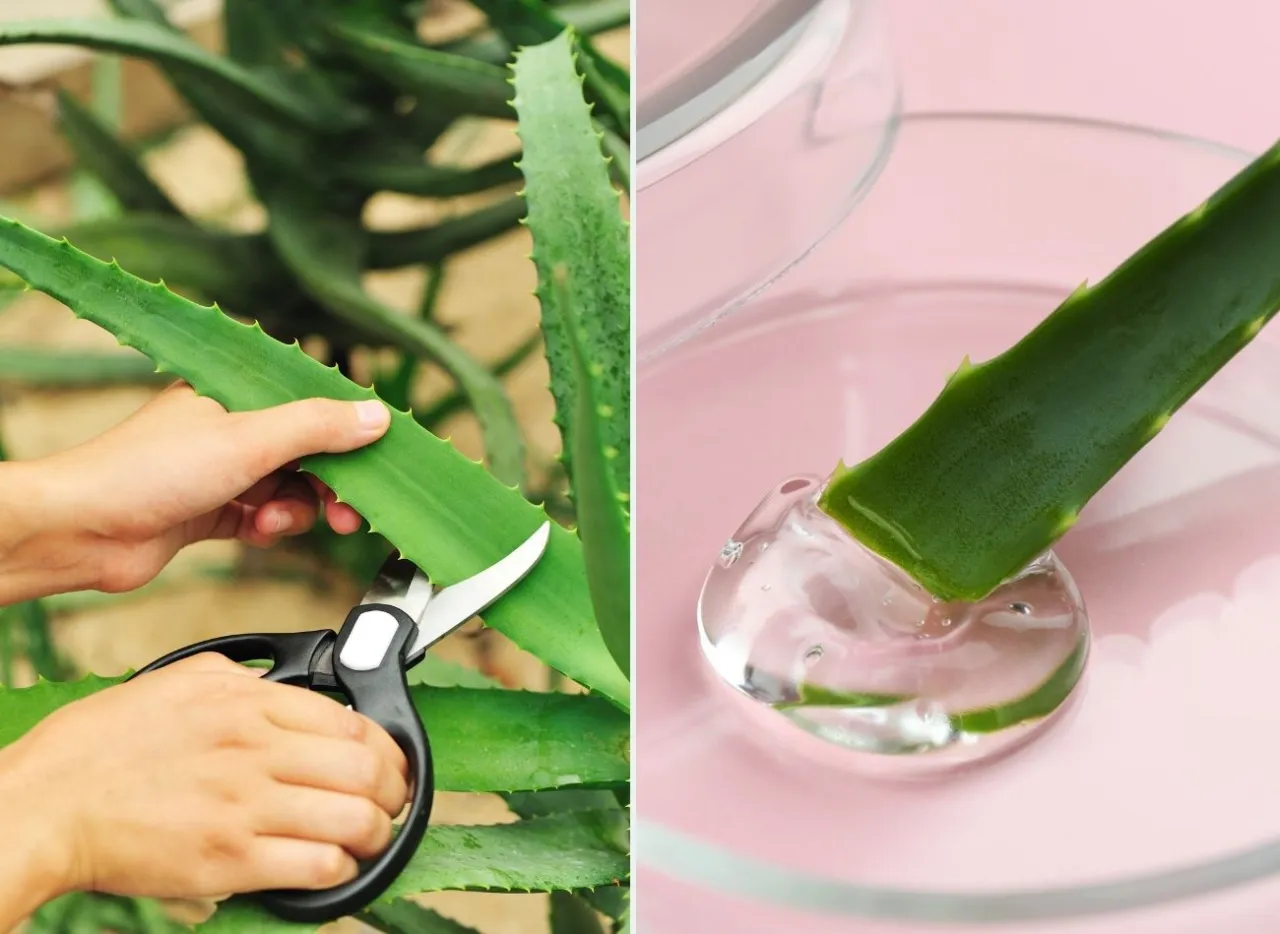
Pozyskiwanie czystego żelu aloesowego po usunięciu aloiny. Harvesting pure aloe gel after removing the aloin.